
Organic wine from the heart of La Mancha
In Miguel Esteban, a village in the south of the province of Toledo, lies the small-scale organic winery Amadís de Yébenes. In 2007, Andrea Yébenes decided to revive her grandparents’ lost winemaking tradition. This marked the beginning of a family project with a focus on nature, heritage and community. In a region where small-scale farming is gradually disappearing, Amadís de Yébenes consciously chooses quality, sustainability and local connection.
Between vineyards and seasonal lagoons
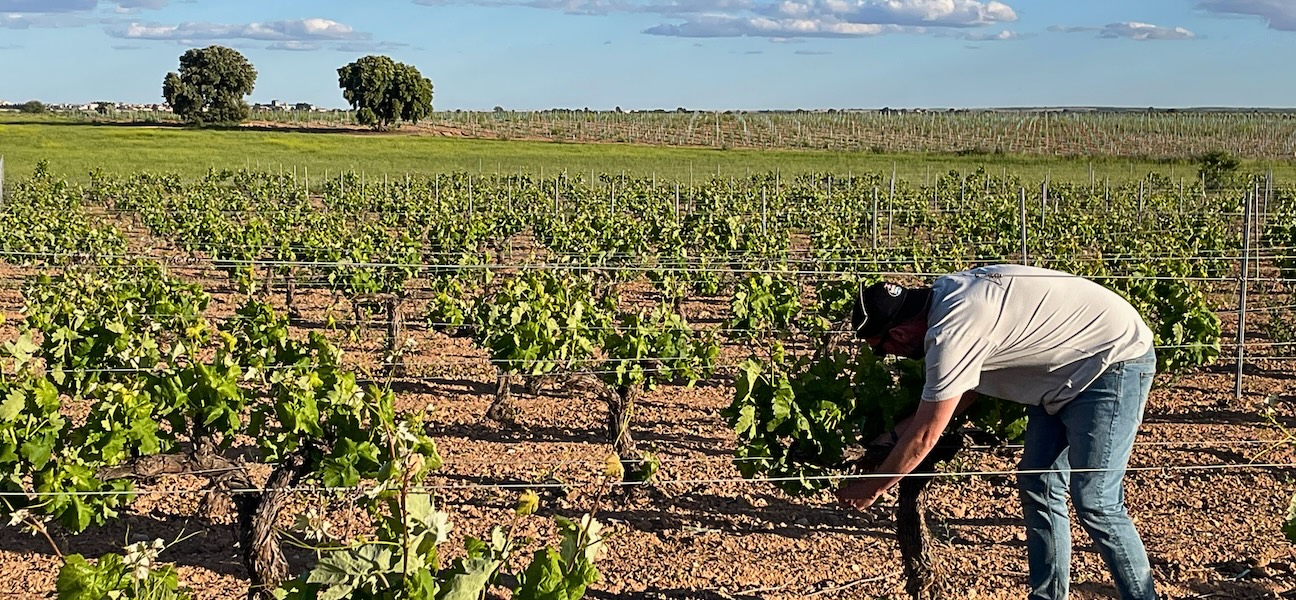
The winery cultivates ten hectares of vineyard at over 670 metres above sea level. The clay-limestone soils are poor in nutrients, making them ideal for organic viticulture. The vines grow near a protected nature reserve with seasonal lagoons, home to a rich biodiversity. This natural environment influences the character of the wines and reinforces the importance of working in harmony with the land.

Craftsmanship in vineyard and cellar
Amadís de Yébenes works entirely organically and is certified as such. Old grape varieties like Airén and Cencibel are harvested by hand, often at night to preserve freshness. In the cellar, small batches are processed using different vessels: stainless steel, wooden barrels in underground caves, and glass demijohns. The wines ferment spontaneously with native yeasts, without unnecessary additives or interventions. Each wine reflects the character of the year, the grape and the land.

Locally rooted, globally minded
The range includes El Último de Quini (Cencibel–Cabernet Sauvignon), Trescatorce (100% Cencibel), and 5000 Cucas (Airén). Each one is an expressive organic wine with a clean, contemporary character. Through small-scale sales, tastings and local events, the winery connects with wine lovers both near and far.

For people and place
Amadís de Yébenes is more than just a winery. Through its commitment to biodiversity, traditional methods and local collaboration, the bodega supports life in and around Miguel Esteban, today and into the future.
